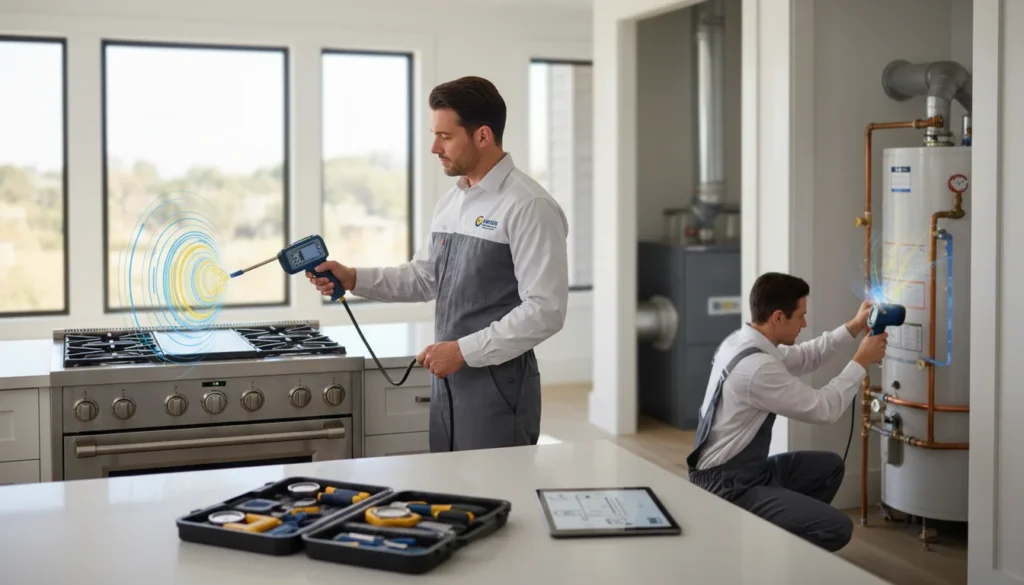
Understanding the Difference Between Gas Leaks and Faulty Appliances
When you smell gas in your Newark home or business, panic can set in quickly. Is it a dangerous gas line leak requiring immediate evacuation? Or could it be a malfunctioning appliance that needs repair? The answer isn’t always obvious, and making assumptions can lead to either unnecessary alarm or dangerous complacency. Professional gas leak detection services provide the definitive answer, using specialized equipment and expertise to pinpoint the exact source of the problem.
Many Newark residents experience gas-related concerns each year, particularly in older neighborhoods where aging infrastructure meets vintage appliances. The challenge lies in accurately identifying whether the issue stems from your gas supply lines or from one of your gas-powered appliances like your furnace, water heater, stove, or dryer. Both scenarios require professional attention, but the urgency, repair approach, and potential dangers differ significantly.
Common Signs That Mimic Gas Leaks
Several appliance-related issues can produce symptoms similar to actual gas line leaks, creating confusion for property owners. Understanding these overlapping signs helps explain why professional detection is essential rather than attempting self-diagnosis.
The Sulfur Smell Confusion
Natural gas is naturally odorless, but utility companies add mercaptan—a chemical with a distinctive rotten egg smell—to help detect leaks. However, this same odor can sometimes emanate from faulty appliances. A malfunctioning water heater with bacteria buildup in the tank can produce hydrogen sulfide gas, which smells remarkably similar to the mercaptan additive in natural gas. Similarly, a pilot light that’s burning inefficiently might produce unusual odors that homeowners mistake for gas leaks.
Unusual Sounds and Appliance Behavior
Hissing sounds near gas appliances might indicate a leak at the appliance connection rather than in your main gas lines. Whistling noises from your furnace or water heater could signal internal component failure. These sounds create legitimate concern, but their source matters tremendously for proper resolution. In areas like Central Business District, where commercial buildings house multiple gas appliances, distinguishing between appliance issues and infrastructure problems becomes even more critical.
Physical Symptoms in Occupants
Both gas leaks and poorly functioning appliances can cause headaches, dizziness, nausea, and fatigue. Carbon monoxide from incomplete combustion in faulty appliances produces these symptoms, as does exposure to natural gas itself. This overlap makes it impossible to diagnose the problem based on health effects alone, underscoring the need for professional detection equipment.
Why Professional Gas Leak Detection Is Essential
Professional technicians bring specialized tools and training that homeowners simply cannot replicate. Their systematic approach eliminates guesswork and provides definitive answers about your gas safety situation.
Advanced Detection Equipment
Professional gas leak detection relies on sophisticated instruments that measure gas concentrations with precision. Combustible gas detectors identify the presence and concentration of natural gas in the air, while electronic sniffers can trace gas to its exact source. Thermal imaging cameras reveal temperature anomalies that might indicate gas escaping from lines or appliances. Ultrasonic leak detectors pick up high-frequency sounds that human ears cannot detect, identifying even small leaks that might otherwise go unnoticed.
These tools provide objective data rather than subjective impressions. A technician can measure exact gas levels at various points throughout your property, creating a map of where concentrations are highest. This scientific approach quickly distinguishes between a gas line problem requiring emergency gas line leak repair and an appliance issue that needs different intervention.
Systematic Inspection Protocols
Professional detection follows established protocols that ensure no potential source goes unchecked. Technicians begin with a visual inspection of all gas lines and appliances, looking for obvious damage, corrosion, or improper installations. They then perform pressure tests on the gas line system, isolating sections to determine if pressure drops indicate leaks in the supply infrastructure.
Next, they test each appliance individually, checking connections, valves, and internal components. This methodical approach identifies whether problems exist in one appliance, multiple appliances, or the supply system itself. In neighborhoods like University Heights, where homes vary widely in age and condition, this comprehensive approach adapts to each property’s unique characteristics.
Safety Protocols During Detection
Professional technicians follow strict safety procedures that protect both themselves and property occupants during the detection process. They understand when to shut off gas supplies, how to ventilate spaces properly, and when situations require evacuation. Their training includes recognizing explosive concentration levels and taking appropriate precautions.
Attempting DIY gas leak detection puts you at risk of ignition sources, inadequate ventilation, or failing to recognize dangerous concentration levels. Professionals eliminate these risks while providing accurate diagnostics.
Common Culprits: When Appliances Are to Blame
Understanding which appliance problems commonly mimic gas leaks helps property owners appreciate the complexity of accurate diagnosis.
Water Heater Issues
Gas water heaters develop several problems that can seem like gas leaks. Loose connections at the gas supply line to the unit may allow small amounts of gas to escape. Failed thermocouples can prevent pilot lights from staying lit, causing repeated attempts to ignite that release unburned gas. Corroded gas control valves might leak internally or externally. Additionally, sediment buildup in the tank can create conditions for bacteria that produce sulfur smells unrelated to gas but easily confused with gas odors.
Furnace and Heating System Problems
Heating systems present multiple potential failure points. Cracked heat exchangers allow combustion gases to enter living spaces, creating carbon monoxide hazards often mistaken for gas leaks. Malfunctioning gas valves might stick partially open, allowing gas to escape without igniting. Blocked vents prevent proper exhaust, causing incomplete combustion and unusual odors. In densely populated areas like Government Center, where buildings share walls, heating system problems in one unit can affect neighboring spaces, complicating diagnosis.
Stove and Oven Complications
Kitchen appliances frequently develop issues that release gas odors. Burners with clogged ports don’t ignite properly, allowing gas to flow without burning. Faulty ignition systems create similar problems. Worn-out gaskets on oven doors or around burner assemblies can allow small gas seeps. Flexible gas connectors behind stoves sometimes develop leaks at compression fittings, especially if the appliance has been moved for cleaning.
Dryer Connection Problems
Gas dryers typically connect to supply lines with flexible connectors that can develop leaks over time. The connections at both ends—where the flexible line meets the rigid pipe and where it connects to the dryer—are common failure points. Additionally, the gas valve on the dryer itself can malfunction, causing leaks independent of the supply system.
When Gas Lines Are Actually Leaking
While appliances cause many gas odor complaints, actual gas line leaks do occur and present serious dangers requiring immediate professional response.
Underground Line Deterioration
Gas lines buried beneath properties deteriorate over time due to soil conditions, moisture, and corrosion. Older steel pipes are particularly vulnerable, while even newer materials can fail due to ground shifting or root intrusion. Underground leaks often manifest as dead vegetation patches, bubbling water in puddles, or exposed soil with a distinctive white or dusty appearance.
Indoor Line Failures
Gas lines running through walls, basements, and crawl spaces can develop leaks from corrosion, physical damage during renovations, or failed joints and connections. These leaks are particularly dangerous because gas accumulates in enclosed spaces, reaching potentially explosive concentrations. Professional detection quickly identifies these scenarios, distinguishing them from appliance problems.
Meter and Regulator Issues
Gas meters and pressure regulators occasionally develop leaks at seals, gaskets, or connection points. These components are technically part of the gas line system rather than appliances, requiring different repair approaches. In neighborhoods like Clinton Hill, where housing stock includes many older homes, aging meter assemblies require particular attention during inspections.
The Detection Process: What to Expect
Understanding what happens during professional gas leak detection helps property owners prepare and appreciate the thoroughness of the service.
Initial Assessment
Technicians begin by gathering information about your concerns—when you noticed problems, where odors are strongest, what symptoms occupants have experienced, and what appliances you use. This background helps focus the investigation while ensuring no potential sources are overlooked.
Exterior Inspection
The detection process typically starts outside, examining the gas meter, main supply line, and any visible exterior piping. Technicians check for obvious damage, test connections, and use detection equipment to measure gas concentrations around these components. They look for environmental indicators like dead vegetation or ground disturbances that might suggest underground leaks.
Interior Systematic Testing
Inside the property, technicians work methodically through each space, testing gas concentrations in ambient air and near all gas appliances and supply lines. They examine each appliance connection, test shutoff valves, and inspect flexible connectors. Using their detection equipment, they can identify even small leaks that wouldn’t produce obvious odors or sounds.
Appliance-Specific Diagnostics
When detection equipment indicates elevated gas levels near specific appliances, technicians perform detailed diagnostics on those units. This might include testing internal components, checking combustion efficiency, examining venting systems, and verifying proper operation of safety mechanisms like thermocouples and flame sensors.
Documentation and Recommendations
Professional detection services provide detailed documentation of findings, including specific locations of any leaks detected, measured gas concentrations, and assessments of each appliance’s condition. This documentation guides repair priorities and provides a baseline for future inspections. Technicians explain whether problems stem from gas lines, appliances, or both, and recommend appropriate next steps.
Newark-Specific Considerations
Newark’s unique housing characteristics and infrastructure present specific challenges for gas leak detection and appliance assessment.
Aging Housing Stock
Many Newark properties were built decades ago when gas line installation standards differed from today’s codes. Older homes may have steel pipes susceptible to corrosion, outdated connection methods, or gas lines that have been modified multiple times over the years. These factors increase the likelihood of gas line problems while also making detection more complex.
Diverse Building Types
Newark includes everything from historic single-family homes to modern high-rise apartments and commercial buildings. Each building type presents unique detection challenges. Multi-unit buildings require testing multiple systems and determining whether problems affect individual units or shared infrastructure. Commercial properties often have larger, more complex gas systems with multiple appliances and extensive piping.
Climate Impacts
Newark’s seasonal temperature variations affect both gas lines and appliances. Freeze-thaw cycles can stress underground pipes, while extreme cold increases gas usage and puts additional demands on appliances. Seasonal changes also affect how gas odors disperse and concentrate in buildings, sometimes making problems more noticeable in certain weather conditions.
Prevention and Maintenance
While professional detection identifies current problems, ongoing maintenance helps prevent future issues with both gas lines and appliances.
Regular Professional Inspections
Annual gas system inspections catch developing problems before they become emergencies. Professional technicians can identify corrosion, wear, and component degradation early, allowing for planned repairs rather than emergency responses. These inspections should cover both gas line infrastructure and all gas appliances.
Appliance Maintenance
Each gas appliance requires specific maintenance to operate safely and efficiently. Water heaters need periodic flushing to remove sediment. Furnaces require filter changes and annual tune-ups. Stoves benefit from burner cleaning and ignition system checks. Following manufacturer maintenance recommendations extends appliance life and reduces leak risks.
Monitoring and Awareness
Property owners should remain alert to changes in how appliances operate, unusual odors, or physical symptoms in occupants. Installing carbon monoxide detectors provides an additional safety layer, alerting you to combustion problems even if you don’t smell gas. Natural gas detectors offer similar protection specifically for gas leaks.
Making the Right Call
When you suspect a gas problem, whether from leaking lines or faulty appliances, the right response is always to contact professionals immediately. Attempting to diagnose the problem yourself risks missing dangerous leaks, misidentifying the source, or creating ignition hazards. Professional gas leak detection provides definitive answers quickly and safely, ensuring that repairs address the actual problem rather than assumptions.
The distinction between gas line leaks and appliance problems matters for safety, repair costs, and long-term solutions. Professional detection eliminates uncertainty, providing the accurate diagnosis needed for effective repairs. Whether your Newark property needs gas line repairs, appliance replacement, or both, professional detection is the essential first step toward resolution and restored safety.
Leave a Reply