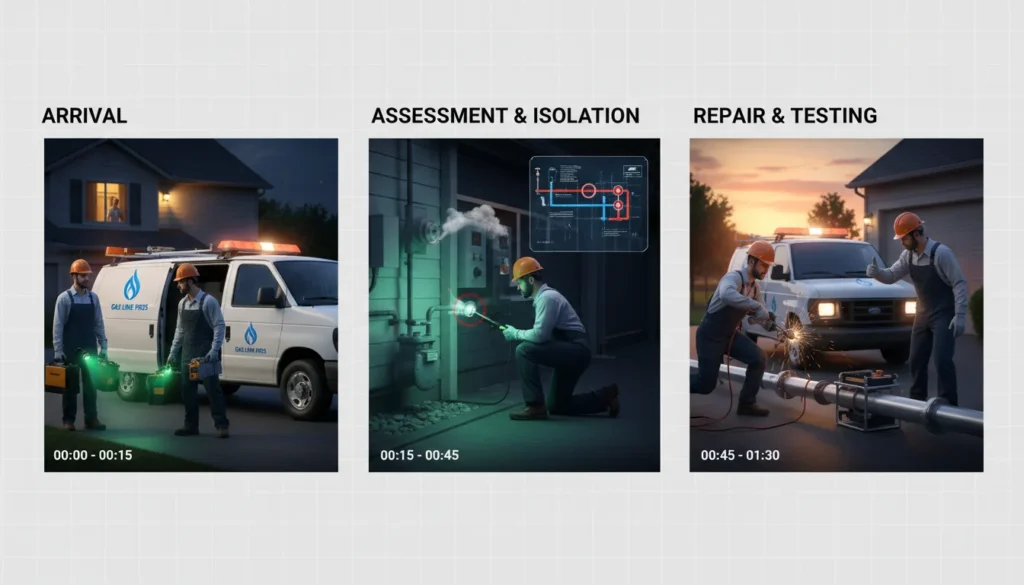
Immediate Response: What to Expect When You Call
When a gas emergency strikes your Newark property, understanding the service call process can provide peace of mind during a stressful situation. From the moment you dial for emergency assistance, a carefully orchestrated response begins that prioritizes your safety above all else. Professional gas line technicians follow strict protocols designed to assess, contain, and repair gas leaks efficiently while minimizing risk to occupants and property.
Emergency gas line service calls differ significantly from routine maintenance appointments. These urgent responses require immediate mobilization of trained professionals equipped with specialized detection equipment, safety gear, and the expertise to handle potentially dangerous situations. In Newark’s diverse neighborhoods—from historic brownstones in the Westside to residential areas in Weequahic—gas line emergencies demand swift, professional intervention.
The Initial Call and Dispatch Process
Your emergency begins with a phone call. When you contact a 24/7 emergency gas line service, the intake process is designed to gather critical information quickly while providing immediate safety guidance. The dispatcher will ask specific questions about the nature of your emergency: Do you smell gas? Have you heard hissing sounds? Are there visible signs of damage to gas lines or appliances?
During this initial conversation, you’ll receive crucial safety instructions. The dispatcher will advise you to evacuate the premises immediately if you smell gas, avoid using electrical switches or creating any sparks, leave doors open as you exit to allow ventilation, and move to a safe distance from the building. These instructions aren’t mere formalities—they’re life-saving protocols that protect you while help is on the way.
Simultaneously, the dispatcher alerts the nearest available emergency response team. In Newark, response times are critical, and professional services maintain strategically positioned crews to ensure rapid arrival. The team receives your address, a description of the emergency, and any relevant details about your property’s gas system before departing.
Technician Arrival and Initial Safety Assessment
When the emergency gas line technician arrives at your Newark property, their first priority is establishing a safety perimeter. Before approaching the building, they’ll assess the situation from the exterior, looking for visible signs of gas release, structural damage, or environmental hazards. This preliminary evaluation determines their approach strategy.
The technician arrives equipped with professional-grade tools including combustible gas detectors, pressure testing equipment, pipe wrenches and specialized tools, personal protective equipment (PPE), and repair materials and replacement parts. This comprehensive toolkit enables them to handle virtually any gas line emergency without delay.
Meeting with the Property Owner
Once the immediate area is deemed safe for approach, the technician will meet with you at a safe distance from the property. This consultation serves multiple purposes: confirming the reported problem, gathering additional information about when symptoms began, learning about recent work or changes to the gas system, and understanding the layout of your property’s gas infrastructure.
This information exchange is vital. Details you provide about your gas appliances and their recent performance can help the technician pinpoint potential problem areas more quickly. Any recent renovations or modifications to your property are particularly relevant, as construction work is a common cause of accidental gas line damage.
Comprehensive Gas Leak Detection and Diagnosis
With safety protocols established and initial information gathered, the technician begins the systematic process of detecting and diagnosing the gas leak. This phase combines high-tech equipment with time-tested techniques to locate even the smallest leaks that pose serious risks.
Electronic Gas Detection
Modern gas detection equipment can sense natural gas concentrations in parts per million. The technician will methodically scan the property, starting from the exterior gas meter and following the line’s path through the building. These sensitive instruments can detect gas even when concentrations are too low for human detection, identifying problems before they become catastrophic.
Visual and Auditory Inspection
Technology is complemented by sensory inspection. Experienced technicians look for discolored vegetation near buried lines, bubbling in standing water near gas lines, damaged or corroded pipes and fittings, and loose connections at appliances or valves. They also listen for the characteristic hissing sound of escaping gas, which can pinpoint leak locations in accessible areas.
Pressure Testing
For certain situations, pressure testing provides definitive evidence of leaks. The technician may isolate sections of your gas line system and pressurize them with air or inert gas, then monitor for pressure drops that indicate leaks. This method is particularly effective for detecting small leaks in concealed piping.
Immediate Containment Measures
Once the leak location is identified, the technician implements containment measures to prevent further gas release while preparing for repairs. The primary step is shutting off gas supply at the appropriate valve—either at the meter for whole-system issues or at individual appliance valves for localized problems.
In cases involving significant gas accumulation, the technician may establish ventilation to safely disperse gas concentrations. This might involve opening windows and doors, using fans to direct airflow away from ignition sources, and monitoring gas levels until they return to safe ranges. Throughout this process, the area remains off-limits to occupants and non-essential personnel.
The Repair Process Explained
With the leak contained and the area safe, the actual repair work begins. The specific repair method depends on the nature and location of the leak, but all repairs follow strict codes and safety standards mandated for gas line work in Newark and throughout New Jersey.
Minor Leak Repairs
For minor leaks at connections or fittings, repairs may be relatively straightforward. The technician will tighten loose fittings using proper torque specifications, replace worn gaskets or seals, apply approved thread sealant to threaded connections, or replace damaged valves or connectors. These repairs can often be completed quickly, allowing for rapid restoration of gas service.
Pipe Section Replacement
When the leak involves damaged pipe sections—whether from corrosion, physical impact, or material failure—the affected section must be replaced. This process involves cutting out the damaged section, preparing pipe ends for connection, installing new pipe of appropriate material and size, and creating secure connections using approved methods such as welding, threading, or compression fittings.
Modern gas line repairs often utilize flexible corrugated stainless steel tubing (CSST) or traditional black iron pipe, depending on the application and local code requirements. The technician selects materials that match or exceed the specifications of your existing system while ensuring compatibility and longevity.
Complex Repairs and System Modifications
Some emergencies reveal problems requiring more extensive work. Corroded sections of underground line may need excavation and replacement, damaged lines in walls may require access opening creation, or outdated systems may need upgrading to current safety standards. In cases requiring gas line relocation or modification, the emergency technician stabilizes the immediate danger and develops a plan for comprehensive repair.
For Newark properties in areas like the Eastside, where older housing stock is common, emergency calls sometimes uncover aging infrastructure that requires updating. While emergency repairs address the immediate leak, technicians will recommend follow-up work to prevent future emergencies.
Testing and Safety Verification
Completing the physical repair is only part of the process. Before restoring gas service, rigorous testing ensures the repair is sound and the system is safe for operation. This multi-step verification process includes pressure testing the repaired section, leak checking all connections with detection solution, verifying proper system pressure throughout, and inspecting for any secondary issues that may have been missed.
The technician uses electronic detectors to scan the entire repair area and surrounding system, ensuring no residual leaks exist. Only when all tests confirm a completely sealed system does the restoration process begin.
System Restoration and Appliance Relighting
With repairs completed and verified, the technician carefully restores gas service to your property. This process follows a specific sequence: slowly opening the main gas valve while monitoring for irregularities, bleeding air from the lines at designated points, checking gas flow at the meter, and systematically relighting pilot lights on appliances.
Each gas appliance in your home requires individual attention. The technician will relight water heaters, furnaces, stoves, and dryers according to manufacturer specifications, ensuring each operates properly. They’ll verify that safety features like flame sensors and automatic shutoffs function correctly, confirming that your entire gas system is not only leak-free but fully operational.
Documentation and Customer Education
Before concluding the service call, the technician provides comprehensive documentation of the emergency response. This paperwork includes a detailed description of the problem discovered, repairs performed with materials used, test results confirming system integrity, and recommendations for any additional work needed.
This is also an educational opportunity. The technician will explain what caused the leak, how to prevent similar issues, warning signs to watch for, and proper maintenance practices for your gas system. This knowledge empowers you to identify potential problems early and maintain a safer home.
Permits and Inspections
Depending on the extent of repairs, municipal permits and inspections may be required. Professional emergency services handle permit acquisition and coordinate required inspections with Newark’s building department. This ensures your repairs meet all legal requirements and maintains your property’s compliance with local codes.
Post-Repair Monitoring and Follow-Up
The service call doesn’t necessarily end when the technician leaves. Reputable emergency gas line services provide follow-up support, including instructions for monitoring your system over the next 24-48 hours, a contact number for questions or concerns, and scheduling for any additional work identified during the emergency call.
You’ll be advised to remain alert for gas odors, unusual appliance behavior, or any signs that problems persist. While properly executed repairs are reliable, this monitoring period provides an additional safety margin and peace of mind.
Cost Considerations and Emergency Service Pricing
Emergency gas line service calls naturally cost more than scheduled maintenance, reflecting the immediate response, after-hours availability, priority scheduling, and risk associated with emergency work. However, professional services provide transparent pricing with clear explanations of charges for service call fees, labor at emergency rates, materials and parts used, and any testing or inspection fees.
Many Newark homeowners find that their homeowner’s insurance covers emergency gas line repairs, particularly when damage results from covered events like storms or accidents. The documentation provided by your service technician supports insurance claims and helps expedite reimbursement.
Why Professional Emergency Response Matters
Gas line emergencies are not DIY situations. Natural gas is highly flammable and can cause explosions, fires, or asphyxiation. Professional emergency technicians bring essential expertise including specialized training in gas system safety, knowledge of Newark building codes and regulations, proper equipment for detection and repair, and insurance and licensing protecting you from liability.
Attempting to repair gas leaks without proper training and equipment puts you, your family, and your neighbors at serious risk. The investment in professional emergency service is minor compared to the potential consequences of improper repairs or delayed response.
Leave a Reply