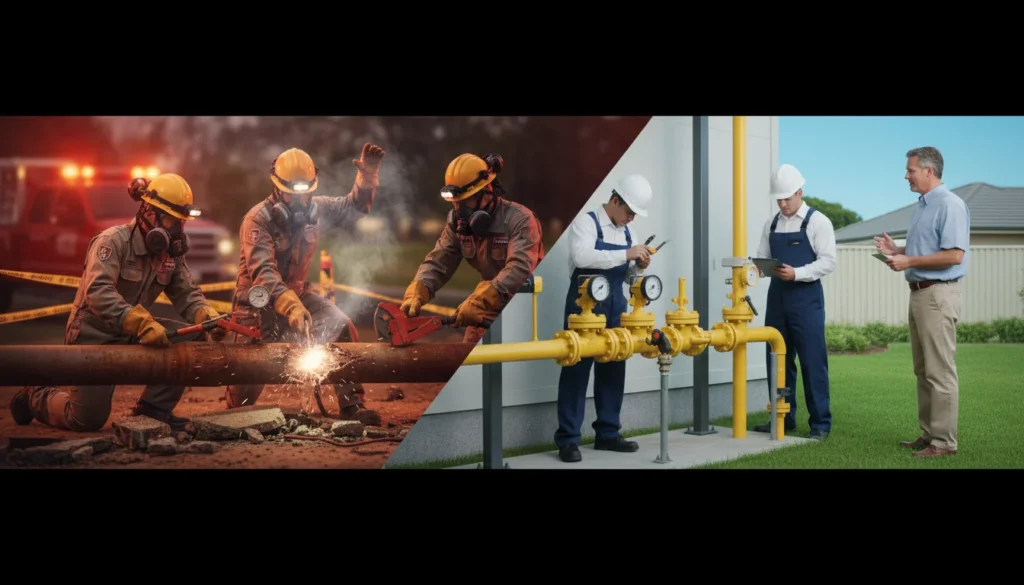
Understanding the Critical Difference Between Emergency and Routine Gas Line Service
When it comes to gas line issues in Newark, knowing the difference between a situation that requires immediate emergency response and one that can wait for scheduled service could literally save lives. Gas line emergencies demand instant professional attention, while routine maintenance and planned upgrades can be scheduled at your convenience. The challenge many Newark homeowners and business owners face is recognizing which category their situation falls into.
At NE Gas Line Emergency Services, we respond to emergency calls throughout Newark 24/7 because we understand that gas leaks and line failures don’t wait for business hours. However, we also provide scheduled services for situations that, while important, don’t pose an immediate threat to safety. This article will help you understand when to call for emergency gas line leak repair and when you can safely schedule a service appointment.
What Constitutes a Gas Line Emergency?
A gas line emergency is any situation where there is an active or suspected gas leak, damage to gas infrastructure, or a condition that could immediately threaten health and safety. These situations require you to evacuate the premises and call for emergency service without delay.
Unmistakable Signs of a Gas Emergency
Natural gas has a distinctive sulfur or rotten egg smell added specifically for safety detection. If you smell this odor anywhere in your home or business, treat it as an emergency. Other critical warning signs include:
- Hissing or whistling sounds near gas lines, appliances, or meters indicating escaping gas
- Dead or dying vegetation in an otherwise healthy area above underground gas lines
- Visible damage to gas lines from construction, vehicle impact, or natural disasters
- Physical symptoms such as dizziness, nausea, headaches, or fatigue that improve when you leave the building
- Dirt or water blowing into the air from the ground, suggesting a ruptured underground line
- Fire or explosion involving gas appliances or lines
In Newark’s diverse neighborhoods, from Clinton Hill to Weequahic, older homes with aging gas infrastructure are particularly vulnerable to sudden failures. If you experience any of these signs, evacuate immediately, call 911 from a safe distance, and then contact NE Gas Line Emergency Services.
Why Gas Emergencies Cannot Wait
The dangers associated with gas leaks escalate rapidly. Natural gas is highly flammable and can reach explosive concentrations in enclosed spaces within minutes. Even small leaks can accumulate in basements, crawl spaces, or between walls, creating invisible pockets of explosive gas.
Carbon monoxide poisoning is another serious risk. When gas appliances malfunction or ventilation is compromised, deadly carbon monoxide can build up without the telltale odor of natural gas. Symptoms often mimic the flu, leading people to delay seeking help until the situation becomes critical.
Additionally, gas leaks can cause asphyxiation in confined spaces by displacing oxygen. This is particularly dangerous because victims may lose consciousness before recognizing the danger.
Situations Appropriate for Scheduled Gas Line Service
Not every gas line issue requires dropping everything and calling for emergency service. Many situations, while important to address, can be safely scheduled during regular business hours when you can plan accordingly and potentially save on emergency service premiums.
Planned Upgrades and Modifications
When you’re renovating your kitchen, adding a gas appliance, or reconfiguring your space, gas line relocation and modification services can be scheduled in advance. These projects require professional expertise but don’t pose immediate danger when your existing system is functioning properly.
Homeowners in Eastside (Sandy Hill) frequently schedule gas line services when updating older homes or converting from electric to gas appliances. These planned projects allow for proper permits, inspections, and coordination with other contractors.
Routine Maintenance and Inspections
Annual gas line inspections are essential preventive measures that help identify potential problems before they become emergencies. During scheduled maintenance, technicians can:
- Test all connections for minor leaks using specialized detection equipment
- Inspect gas lines for corrosion, wear, or damage
- Verify proper appliance ventilation and combustion
- Check pressure regulators and safety valves
- Ensure compliance with current safety codes
These proactive services are best scheduled during mild weather when your gas heating system isn’t in constant use, making it easier to temporarily shut off gas service if needed.
Non-Emergency Repairs
Some gas line issues, while requiring professional attention, don’t constitute emergencies. For example, if you notice a slight decrease in appliance performance or inconsistent flame patterns but don’t smell gas, you can schedule a service call during normal business hours. Similarly, if you’re planning to cap off an unused gas line or need to replace aging but currently functional infrastructure, these can be scheduled appointments.
The Gray Area: When to Err on the Side of Caution
Some situations fall into a gray area where the urgency isn’t immediately clear. In these cases, it’s always better to treat the situation as an emergency and let professionals determine the actual risk level.
Intermittent Gas Odors
If you occasionally smell gas but it dissipates quickly, you might be tempted to wait and see if it happens again. Don’t. Even brief or intermittent odors can indicate a leak that’s venting in a way that temporarily masks the problem. What seems minor could be a significant leak that’s only detectable under certain conditions like wind direction or temperature changes.
Recent Construction or Ground Disturbance
If there’s been any digging, construction, or ground disturbance near your property, even if you don’t currently smell gas, it’s wise to have your lines inspected immediately. Underground gas lines can be damaged during excavation, and the damage may not manifest as a leak until days or weeks later when the compromised line finally fails.
Newark’s ongoing infrastructure improvements and development projects in areas like Vailsburg mean that ground disturbance is common. Property owners should be vigilant about protecting their gas lines during nearby construction activities.
Appliance Malfunctions
When gas appliances show signs of malfunction such as yellow instead of blue flames, soot buildup, or pilot lights that frequently go out, the urgency depends on other factors. If these symptoms are accompanied by any gas odor or physical symptoms in occupants, treat it as an emergency. If not, schedule a service call within 24-48 hours rather than waiting for your next routine maintenance.
The Risks of Delaying Necessary Gas Line Repairs
One of the most dangerous mistakes property owners make is recognizing a problem but convincing themselves it can wait. This decision can have catastrophic consequences.
Escalation of Minor Issues
Gas line problems rarely improve on their own. A small leak will typically worsen over time as corrosion spreads, connections loosen further, or damaged areas deteriorate. What could have been a simple repair during a scheduled service call can escalate into a full emergency requiring extensive repairs and posing serious safety risks.
Financial Implications
Beyond safety concerns, delaying repairs often costs more in the long run. Emergency repairs typically carry premium pricing due to the immediate response required and the potential for after-hours service. Additionally, gas leaks waste energy, increasing your utility bills. More significantly, if a delayed repair results in property damage or injury, the costs can be astronomical.
Legal and Insurance Complications
Property owners have a legal responsibility to maintain safe gas systems. If an incident occurs and it’s determined that you were aware of a problem but delayed addressing it, you could face liability issues. Insurance companies may also deny claims if they determine that negligence or delayed maintenance contributed to the damage.
How to Prepare for Both Emergency and Scheduled Services
Being prepared for gas line services, whether emergency or scheduled, can make the process smoother and safer.
For Emergency Situations
Keep emergency contact information readily accessible. Save the number for NE Gas Line Emergency Services in your phone and post it in a visible location in your home. Know where your main gas shutoff valve is located and how to operate it. However, only shut off gas in a true emergency, as relighting pilot lights and restoring service requires professional assistance.
Develop and practice an evacuation plan with all household members. Everyone should know to exit immediately if they smell gas, not to use any electrical switches, phones, or devices while inside, and where to meet outside at a safe distance.
For Scheduled Services
When scheduling routine maintenance or planned upgrades, provide technicians with complete information about your system’s age, any previous repairs, and current concerns. Clear access to gas lines, meters, and appliances by removing stored items or obstacles. If you have pets, plan to secure them during the service visit.
Schedule services during times when you can be present to answer questions and discuss findings with the technician. This is particularly important for older properties where unexpected issues might be discovered during routine work.
Newark-Specific Considerations for Gas Line Services
Newark’s unique characteristics influence both emergency and scheduled gas line services. The city’s housing stock includes many older buildings with aging gas infrastructure that requires special attention. Homes built before modern safety codes may have galvanized steel pipes that are prone to corrosion, or configurations that don’t meet current standards.
The city’s density means that gas emergencies can potentially affect multiple properties. A leak in one unit of a multi-family building or a main line issue can impact entire blocks. This makes prompt emergency response even more critical in Newark’s residential neighborhoods.
Seasonal factors also play a role. Newark’s cold winters mean that heating systems work overtime, increasing stress on gas lines and appliances. Fall is an ideal time to schedule preventive maintenance before the heating season begins, while spring is perfect for addressing any issues that arose during winter.
Working with Professional Gas Line Services
Whether you’re facing an emergency or scheduling routine service, working with qualified, licensed professionals is non-negotiable. Gas line work requires specialized knowledge, proper tools, and adherence to safety codes.
What to Expect from Emergency Response
When you call NE Gas Line Emergency Services for an emergency, expect rapid response. Our technicians arrive equipped to assess the situation, locate leaks, perform temporary safety measures if needed, and complete permanent repairs. We coordinate with utility companies and local authorities as required and ensure your property is safe before leaving.
What to Expect from Scheduled Services
Scheduled services typically begin with an assessment of your current system, discussion of your needs or concerns, and a detailed explanation of recommended work. You’ll receive transparent pricing before work begins and a clear timeline for completion. All work includes proper permitting, inspections, and documentation to ensure compliance with local codes.
Making the Right Call: A Decision Framework
When faced with a potential gas line issue, use this framework to decide whether to call for emergency service or schedule an appointment:
Call Emergency Services Immediately If:
- You smell gas anywhere in or around your property
- You hear hissing or whistling near gas lines
- There’s visible damage to gas infrastructure
- Anyone experiences symptoms of gas exposure or carbon monoxide poisoning
- There’s been any incident involving fire, explosion, or impact to gas lines
- Recent construction or excavation occurred near gas lines
Schedule Service Within 24-48 Hours If:
- Gas appliances show performance issues without gas odor
- You notice minor corrosion or wear on visible gas lines
- Pilot lights require frequent relighting
- You’re experiencing unexplained increases in gas bills
Schedule Routine Service If:
- You’re planning renovations involving gas lines
- It’s been more than a year since your last inspection
- You’re adding or removing gas appliances
- You want to upgrade aging but functional gas infrastructure
When in doubt, remember that it’s always safer to treat a situation as an emergency. A false alarm is infinitely preferable to a delayed response to a genuine emergency.
Leave a Reply