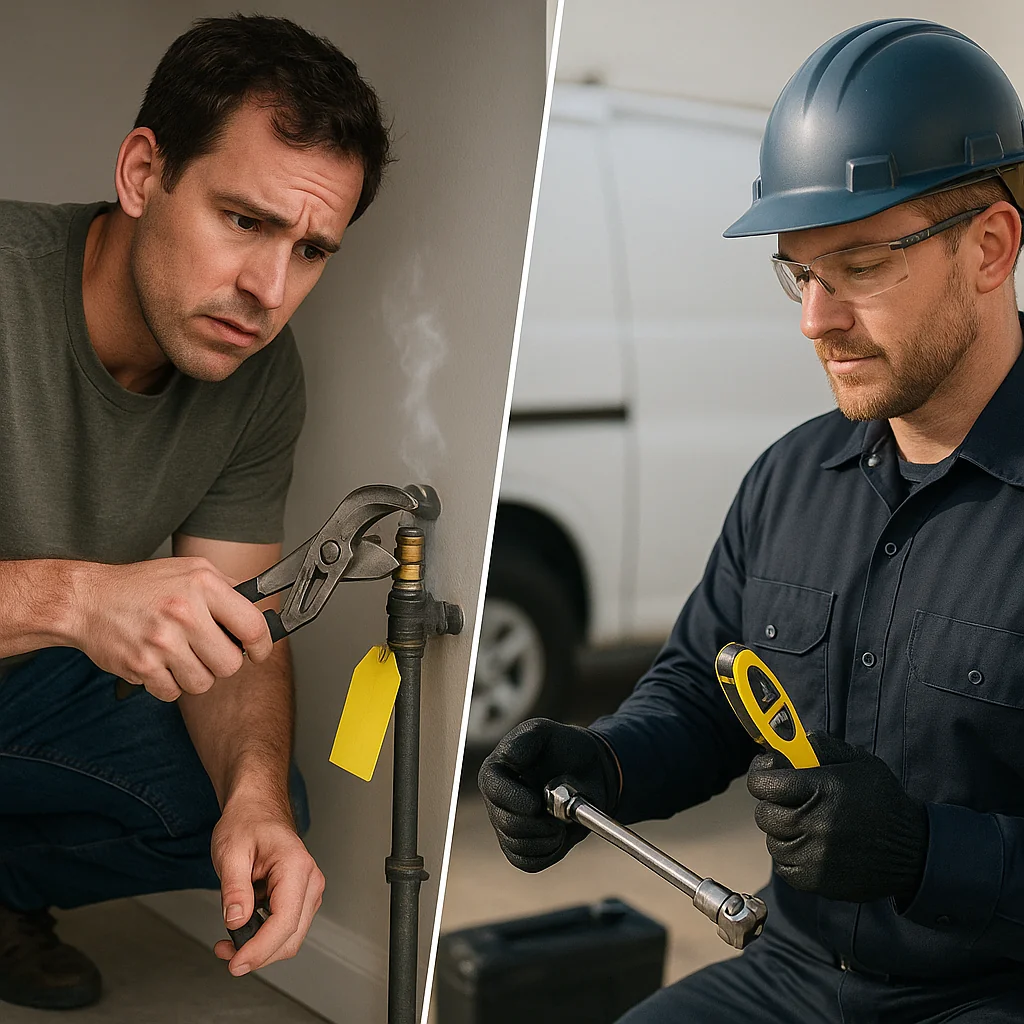
Why Attempting DIY Gas Line Repairs Puts Newark Homes at Serious Risk
Natural gas powers millions of homes across Newark, providing efficient heating, cooking, and hot water. However, when gas line problems arise, the temptation to save money through DIY repairs can be overwhelming. The reality is that attempting to repair gas lines without proper training, licensing, and equipment creates life-threatening hazards including explosions, fires, carbon monoxide poisoning, and regulatory violations. Licensed gas technicians undergo years of specialized training and follow strict protocols that protect your family, property, and entire neighborhood from catastrophic consequences.
The Hidden Dangers of DIY Gas Line Work
Gas line systems operate under significant pressure and require precise installation techniques that most homeowners simply cannot replicate. Even minor mistakes during DIY repairs can have devastating consequences that may not become apparent until it’s too late.
Explosion and Fire Risks
Natural gas is highly flammable and explosive when mixed with air in concentrations between 5% and 15%. A small leak caused by improper connections, inadequate sealing, or incorrect pipe sizing can quickly fill an enclosed space with combustible gas. Unlike water leaks that provide visible warning signs, gas leaks are often silent and invisible until ignition occurs.
In Newark’s densely populated neighborhoods, a gas explosion in one home can cause catastrophic damage to adjacent properties. DIY repairs frequently involve incorrect pipe threading, improper joint compound application, or using incompatible materials that fail under pressure. Professional technicians understand that every connection must be perfectly sealed and pressure-tested before the system is reactivated.
Carbon Monoxide Poisoning
Improperly repaired gas lines can lead to incomplete combustion in appliances, producing deadly carbon monoxide gas. This colorless, odorless poison causes symptoms that mimic the flu, including headaches, dizziness, nausea, and confusion. Prolonged exposure leads to unconsciousness and death.
DIY repairs often fail to account for proper venting, adequate air supply, and correct gas pressure regulation. Licensed technicians test combustion efficiency and carbon monoxide levels after every repair to ensure appliances operate safely.
Structural Damage from Corrosion
Many DIY enthusiasts don’t understand that different metals cannot be directly connected in gas line systems without proper dielectric unions. Galvanic corrosion occurs when dissimilar metals contact each other in the presence of an electrolyte, causing rapid deterioration that leads to leaks.
Professional gas technicians know which materials are compatible, how to prevent corrosion, and which coatings or separators must be used. They also understand soil conditions in different Newark neighborhoods that affect underground piping choices.
Legal and Insurance Consequences of Unlicensed Gas Work
Beyond the immediate safety risks, DIY gas line repairs create serious legal and financial liabilities that many homeowners don’t consider until after problems arise.
Code Violations and Fines
Newark, like all New Jersey municipalities, requires that gas line work be performed by licensed professionals and inspected by local authorities. Gas line code compliance ensures that installations meet minimum safety standards established to protect public welfare.
Unlicensed gas work violates state and local building codes, resulting in substantial fines and mandatory corrections. When code violations are discovered during home inspections for sale or refinancing, they can derail real estate transactions and require expensive remediation by licensed contractors.
Voided Insurance Coverage
Most homeowner’s insurance policies explicitly exclude coverage for damage caused by unlicensed work on critical systems like gas lines. If a DIY repair leads to a fire, explosion, or carbon monoxide incident, your insurance company may deny your claim entirely, leaving you personally liable for all damages.
This liability extends beyond your own property. If your DIY gas work causes damage to neighboring homes in areas like Vailsburg or other Newark neighborhoods, you could face substantial lawsuits from affected parties.
Permit Requirements and Inspections
Gas line modifications require permits from local building departments and must pass inspection before being placed into service. DIY work bypasses this critical safety checkpoint, creating hidden hazards that may not be discovered for years.
Licensed contractors handle all permitting and coordinate inspections as part of their service. They understand local requirements and maintain relationships with inspectors that facilitate smooth project completion.
What Licensed Gas Technicians Do Differently
Professional gas line technicians bring specialized knowledge, equipment, and procedures that ensure safe, compliant repairs that protect your family and investment.
Comprehensive Training and Certification
Licensed gas technicians complete extensive apprenticeships lasting four to five years, combining classroom instruction with hands-on field experience. They study gas properties, pressure calculations, pipe sizing, material compatibility, combustion principles, and safety protocols.
Continuing education requirements ensure technicians stay current with evolving codes, new materials, and emerging technologies. This depth of knowledge cannot be replicated by watching online videos or reading DIY guides.
Specialized Tools and Equipment
Professional gas work requires specialized equipment that most homeowners don’t own and wouldn’t know how to use properly. Licensed technicians arrive with:
- Electronic gas detectors capable of identifying leaks at concentrations as low as one part per million
- Manometers for precise pressure testing and regulation
- Pipe threading and cutting equipment designed for gas applications
- Combustion analyzers that measure efficiency and safety
- Proper pipe wrenches and torque tools that prevent over-tightening or under-tightening
These tools allow technicians to diagnose problems accurately, make precise repairs, and verify system safety before restoration.
Systematic Diagnostic Approach
When addressing gas line issues, licensed technicians follow methodical diagnostic procedures rather than guessing at solutions. They begin with comprehensive system evaluation, identifying not just the immediate problem but underlying conditions that may have contributed to failure.
For emergency gas line leak situations, professionals know how to safely isolate problems, ventilate affected areas, and prevent ignition sources while making repairs. Their training includes emergency response protocols that minimize risk during crisis situations.
Proper Materials and Installation Techniques
Professional gas technicians use only approved materials rated for gas service and understand the specific application requirements for each product. They know which pipe dope or thread sealant is gas-safe, how many wraps of Teflon tape to apply, and which direction to wrap threads.
Installation techniques include proper pipe support spacing, expansion compensation for temperature changes, and protection from physical damage. When working on gas appliance connections, they ensure proper sediment trap installation, correct connector types, and adequate shutoff valve placement.
Pressure Testing and Leak Detection
After completing repairs, licensed technicians perform rigorous pressure testing using calibrated gauges. They pressurize the system above normal operating levels and monitor for any pressure drop that would indicate a leak.
Multiple leak detection methods are employed, including electronic sensors, soap solution testing, and visual inspection. Every joint, connection, and fitting is verified before the system is returned to service.
Documentation and Warranty
Professional gas work includes proper documentation of all repairs, materials used, and test results. This paperwork provides proof of compliant work for inspectors, insurance companies, and future buyers.
Licensed contractors stand behind their work with warranties that protect you from defects in materials or workmanship. If problems arise after repairs, they return to make corrections at no additional cost.
Common DIY Gas Line Mistakes That Lead to Disasters
Understanding the specific errors that DIY enthusiasts commonly make helps illustrate why professional expertise is essential for gas line work.
Using Incorrect Pipe Materials
Many homeowners use materials never intended for gas service, such as PVC pipe, standard black iron without proper coating, or flexible connectors in permanent installations. Each gas application requires specific approved materials based on location, pressure, and environmental conditions.
Improper Sizing Calculations
Gas pipe sizing involves complex calculations considering pipe length, number of fittings, pressure drop, and total BTU demand from all appliances. Undersized pipes starve appliances of fuel, causing inefficient combustion and carbon monoxide production. Oversized pipes waste money and may violate codes.
Inadequate Joint Sealing
Threaded gas pipe connections require specific techniques including proper thread engagement, correct sealant application, and appropriate tightening torque. Too loose and the joint leaks; too tight and threads strip or pipes crack.
Skipping Pressure Tests
DIY repairs rarely include proper pressure testing, leaving hidden leaks that may not become apparent until dangerous gas accumulation occurs. Professional testing catches these problems before they threaten safety.
Ignoring Ventilation Requirements
Gas appliances require adequate combustion air and proper venting. DIY work often fails to account for these needs, creating carbon monoxide hazards even when the gas line itself is leak-free.
When to Call Professional Gas Technicians
Certain situations absolutely require professional intervention, with no exceptions for DIY attempts:
- Any smell of gas or suspected leak requiring immediate professional response
- Installing new gas lines for appliances or additions
- Relocating existing gas lines during renovations
- Upgrading gas service for increased capacity
- Repairing damaged or corroded gas pipes
- Converting between natural gas and propane
- Addressing code violations identified during inspections
Residents throughout Newark neighborhoods, from Eastside to the West Ward, should establish relationships with licensed gas contractors before emergencies arise. Having a trusted professional available means faster response when problems occur.
The True Cost Comparison: DIY vs. Professional Service
While DIY repairs may appear less expensive initially, the total cost calculation tells a different story when all factors are considered.
Hidden DIY Costs
DIY gas work often requires purchasing or renting specialized tools you’ll rarely use again. Materials from big box stores may cost more than contractor pricing. Most significantly, mistakes lead to callbacks, additional materials, and potentially catastrophic damage that dwarfs any initial savings.
Professional Value
Licensed technicians complete repairs correctly the first time, with warranties protecting your investment. Their work passes inspection, maintains insurance coverage, and provides documentation that protects property value. The peace of mind knowing your family is safe from gas hazards is invaluable.
Protecting Your Newark Home with Professional Gas Service
Your home’s gas system is too critical for experimentation. The specialized knowledge, tools, and procedures that licensed technicians bring ensure safe, compliant repairs that protect what matters most. While DIY projects have their place in home maintenance, gas line work should always be left to qualified professionals who understand the serious responsibilities involved.
Regular professional inspections catch small problems before they become emergencies, extend system life, and ensure optimal efficiency. Building a relationship with a trusted gas service provider means faster response when urgent situations arise and expert guidance for all your gas system needs.
Leave a Reply