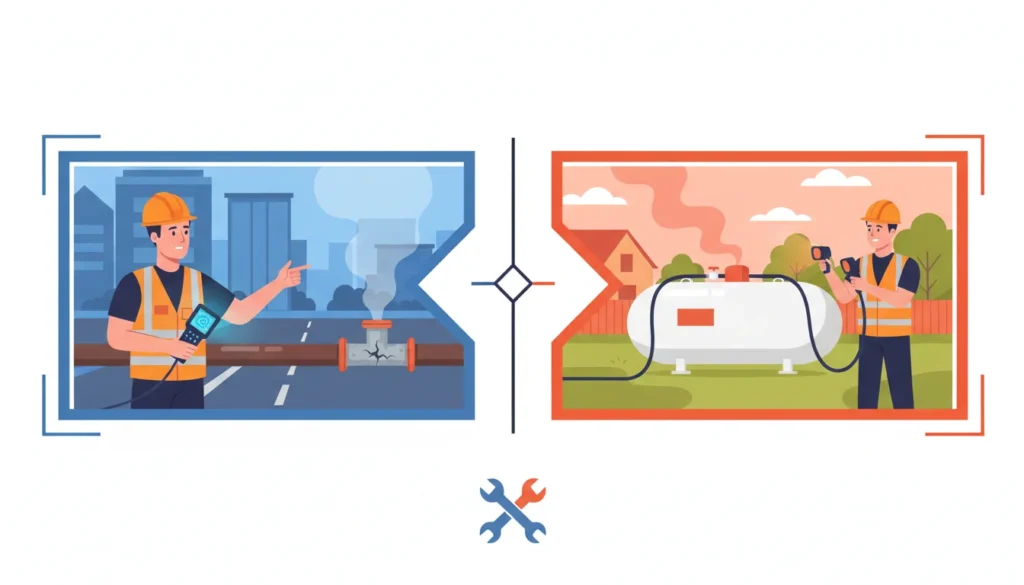
Understanding the Fundamental Differences Between Natural Gas and Propane Leaks
When it comes to gas line emergencies in Newark, understanding the distinction between natural gas and propane leaks is critical for both safety and proper repair procedures. While both fuels power homes and businesses throughout the area, their physical properties, distribution systems, and leak repair protocols differ significantly. Natural gas, primarily methane, is lighter than air and rises when released, while propane is heavier than air and settles in low-lying areas. This fundamental difference affects everything from detection methods to repair techniques, making it essential for property owners to understand what type of gas system they have and how professionals approach each type of leak.
In Newark’s diverse neighborhoods, from historic brownstones to modern commercial buildings, both natural gas and propane systems serve critical heating, cooking, and energy needs. The repair process for each gas type involves specialized knowledge, equipment, and safety protocols that trained professionals must follow to ensure complete resolution of the leak and ongoing safety for occupants.
Physical Properties That Impact Leak Detection and Repair
The molecular composition of natural gas versus propane creates distinct behaviors when leaks occur, directly influencing how technicians approach detection and repair. Natural gas consists primarily of methane with an added odorant called mercaptan, giving it that distinctive sulfur or rotten egg smell. Because methane is lighter than air with a specific gravity of approximately 0.6, it disperses upward and outward when released indoors, typically accumulating near ceilings, in attic spaces, or venting through upper-level openings.
Propane, conversely, has a specific gravity of 1.5, making it significantly heavier than air. When propane leaks occur, the gas sinks and pools in basements, crawl spaces, floor drains, and other low-lying areas. This settling behavior creates different hazard zones and requires technicians to check completely different areas during inspection. The concentration patterns also affect ventilation strategies during repair work, with natural gas requiring upper ventilation points while propane demands lower-level air circulation.
Pressure Differences in Distribution Systems
Natural gas typically arrives at properties through municipal distribution lines at relatively low pressures, usually between 0.25 to 2 psi for residential service. These underground lines connect directly to meters outside buildings, with the gas company maintaining responsibility for the line up to the meter. Repairs on the customer side of the meter involve working with established, stable pressure systems that remain constant.
Propane systems operate quite differently, with gas stored in pressurized tanks at much higher pressures, often between 100 to 200 psi within the tank itself, then regulated down to usable pressures for appliances. This means propane leak repairs often involve assessing tank integrity, pressure regulators, and the entire delivery system from tank to appliance. The higher initial pressures create different leak dynamics and potential hazard levels that technicians must account for during repair work.
Detection Methods: How Professionals Identify Each Type of Leak
Professional leak detection begins with understanding the gas type and its behavioral characteristics. For natural gas systems common throughout Vailsburg and other Newark neighborhoods, technicians use electronic gas detectors calibrated specifically for methane. These sensitive instruments can detect concentrations as low as 5 parts per million, allowing professionals to pinpoint leak locations even before odors become noticeable to occupants.
Detection protocols for natural gas include checking all upper areas of structures, testing around pipe joints and connections, inspecting appliance connections, and using pressure testing on isolated sections of line. Technicians may also employ soap bubble solutions on suspected joints, watching for bubble formation that indicates escaping gas. Infrared cameras can sometimes detect natural gas leaks by identifying temperature variations where gas escapes and expands.
Propane-Specific Detection Techniques
Propane detection requires different equipment and strategies due to the gas’s heavier-than-air properties. Technicians working on propane systems in areas like Clinton Hill position detectors at floor level and in basement areas where propane naturally accumulates. Specialized propane detectors use different sensor technologies optimized for detecting heavier hydrocarbon gases.
The detection process for propane also involves thorough tank inspection, including checking for corrosion, valve integrity, and regulator function. Because propane systems are self-contained rather than connected to municipal supplies, the entire system from tank to end-use requires comprehensive evaluation. Technicians perform pressure drop tests by isolating the system, pressurizing it, and monitoring for pressure loss over time, which indicates a leak somewhere in the system.
Safety Protocols: Critical Differences During Repair
Safety procedures vary significantly between natural gas and propane leak repairs due to the distinct hazard profiles of each fuel. Natural gas leak repairs require immediate ventilation through upper-level windows and doors, with fans positioned to push potentially explosive mixtures out of the structure. Technicians ensure all ignition sources are eliminated and often coordinate with local utilities to reduce or shut off gas supply at the meter.
For propane leaks, safety protocols focus on lower-level hazards. Professionals avoid creating any air currents that might spread pooled propane to ignition sources. Evacuation zones may be larger for propane leaks because the gas doesn’t disperse as readily as natural gas. Tank-related leaks require special considerations, as the pressurized vessel itself presents additional risks. Technicians may need to transfer propane to another tank or safely vent the system before beginning repairs.
Evacuation and Emergency Response
Emergency response procedures differ based on gas type and leak severity. Natural gas leaks often allow for quicker re-entry after ventilation because the gas rises and disperses. However, in enclosed spaces or when significant accumulation has occurred, professionals may require longer clearance times and multiple gas readings before declaring an area safe.
Propane emergencies typically necessitate longer evacuation periods and more extensive clearance procedures. Because propane settles and lingers in low areas, simply opening windows may not adequately clear the hazard. Professional remediation might involve forced air systems, extended ventilation periods, and comprehensive testing of all low-lying areas before allowing occupants to return. Properties in neighborhoods like Weequahic with basement apartments or below-grade spaces require especially thorough clearance protocols for propane leaks.
The Repair Process: Technical Differences Explained
Once a leak is located and the area is deemed safe for repair work, the actual repair processes diverge based on gas type, system configuration, and local code requirements. Natural gas line repairs typically involve working with black iron pipe, corrugated stainless steel tubing (CSST), or copper lines, depending on the installation era and local codes. Technicians must shut off gas at the meter, depressurize the affected section, and make repairs using approved methods and materials.
Common natural gas repair procedures include replacing corroded pipe sections, re-threading and resealing joints with approved pipe dope or tape, replacing faulty valves, and updating connections to meet current code compliance standards. After repairs, the system must be pressure tested, typically at 1.5 times operating pressure, and held for a specified period to ensure integrity. Only after passing pressure tests can gas be reintroduced and appliances tested for proper operation.
Propane System Repairs and Components
Propane system repairs involve additional components not present in natural gas systems. Tank inspection and potential tank replacement may be necessary if corrosion or damage is found. Regulators, which reduce tank pressure to usable levels, often require replacement rather than repair when faulty. The copper or flexible connectors used in propane systems may have different specifications than those used for natural gas.
Propane repairs also frequently involve updating or replacing the entire delivery system from tank to appliances. Because propane systems are self-contained, professionals can more easily isolate and test individual sections. However, the higher pressures involved mean that even small imperfections in repairs can lead to significant leaks. Technicians must use torque specifications for all fittings and perform leak tests at full system pressure before returning the system to service.
Material and Equipment Considerations
The materials used in natural gas versus propane systems sometimes differ due to pressure requirements and gas properties. While both systems commonly use black iron pipe for main distribution lines, propane’s higher pressures may require heavier wall thicknesses or higher-grade materials for certain applications. Flexible connectors for appliances must be rated specifically for the gas type and pressure range.
Repair equipment also varies between gas types. Natural gas repairs use pressure testing equipment calibrated for lower pressures, while propane work requires gauges and test equipment rated for significantly higher pressures. Thread sealants and joint compounds must be compatible with the specific gas type, as some materials that work well with natural gas may degrade when exposed to propane.
Specialized Tools for Each Gas Type
Professional technicians maintain separate tool sets and testing equipment for natural gas versus propane work. Electronic leak detectors must be calibrated for the specific gas being detected, as sensors optimized for methane may not accurately detect propane and vice versa. Pressure testing equipment, torque wrenches, and specialty fittings may differ between the two gas types.
Service providers working throughout Newark’s Eastside and other areas maintain comprehensive inventories of parts and equipment for both gas types, ensuring they can properly address any leak situation. This specialized equipment represents a significant investment and underscores why professional service is essential for gas leak repairs.
Code Compliance and Permitting Differences
Local building codes and permitting requirements may differ for natural gas versus propane installations and repairs. Natural gas work typically falls under municipal jurisdiction and must comply with local amendments to national codes like the International Fuel Gas Code. Utilities may also have specific requirements for work on customer-owned lines beyond the meter.
Propane installations and repairs must comply with NFPA 58 (Liquefied Petroleum Gas Code) in addition to local requirements. Because propane systems include storage tanks, additional regulations govern tank placement, sizing, and maintenance. Some repairs may require permits and inspections that wouldn’t be necessary for equivalent natural gas work. Significant propane system modifications often need engineering review and approval.
Cost Factors in Natural Gas vs Propane Leak Repairs
Repair costs vary based on leak severity, location, and required work, but some general differences exist between natural gas and propane repairs. Natural gas leak repairs often involve simpler systems with fewer components, potentially reducing labor time and parts costs. However, if municipal utility coordination is required or if extensive pipe replacement is needed, costs can escalate quickly.
Propane repairs may involve higher parts costs due to specialized regulators, tank components, and pressure-rated materials. Tank replacement or relocation can represent a significant expense beyond simple line repairs. However, because propane systems are self-contained, some repairs can be completed more quickly without utility coordination, potentially reducing labor costs.
Long-Term Maintenance and Prevention
Preventive maintenance requirements differ between natural gas and propane systems. Natural gas systems benefit from annual inspections of all connections, appliances, and accessible piping. Because the gas supply is continuous and pressure-stable, system degradation tends to occur gradually, making regular inspections effective for catching problems early.
Propane systems require more frequent attention to specific components. Tanks need regular inspection for corrosion, especially in humid climates. Regulators have finite service lives and should be replaced according to manufacturer recommendations. The entire propane system should be pressure tested periodically to ensure integrity. Because propane is delivered and stored on-site, maintaining proper tank levels and monitoring for unusual consumption patterns helps identify leaks before they become emergencies.
When to Call Professional Help
Regardless of gas type, any suspected leak requires immediate professional attention. Natural gas leaks often present with the characteristic sulfur odor, hissing sounds near pipes, or dead vegetation over underground lines. Propane leaks may be detected by odor in low-lying areas, frost formation on tanks or lines, or the smell of gas near floor drains or basements.
Never attempt DIY repairs on either natural gas or propane systems. Both fuels are highly flammable and can create explosive atmospheres at relatively low concentrations. Professional technicians have the training, equipment, and experience to safely diagnose and repair leaks while ensuring compliance with all safety codes and regulations. Emergency services are available 24/7 for gas leak situations, recognizing that these hazards require immediate professional response regardless of when they occur.
Leave a Reply