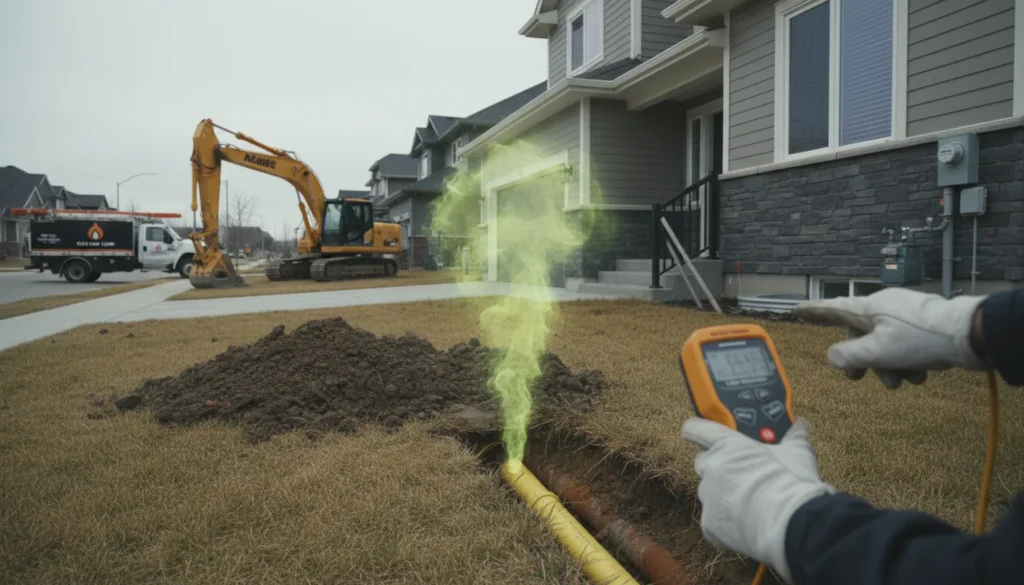
What That Gas Smell Outside Your Newark Home Really Means
If you’ve detected a gas smell outside your house in Newark, you’re right to be concerned. That distinctive sulfurous odor—often described as smelling like rotten eggs—is deliberately added to natural gas to help you detect leaks quickly. When you smell gas outdoors near your property, it typically indicates an underground gas line issue that requires immediate professional attention. Underground gas line repair is not a DIY project, and understanding when to call for emergency service can protect your family, neighbors, and property from serious danger.
Newark residents from Eastside Sandy Hill to downtown have experienced gas line issues due to aging infrastructure, ground shifting, and tree root intrusion. Whether you live in a historic neighborhood with decades-old pipes or a newer development, underground gas lines can develop leaks that manifest as outdoor gas odors. This comprehensive guide will help you understand what causes these smells, how to respond safely, and when professional underground gas line repair becomes necessary.
Understanding Natural Gas and Why You Can Smell It
Natural gas in its pure form is actually colorless and odorless, which would make leaks virtually impossible to detect. Utility companies add a chemical called mercaptan—a sulfur-based compound—to give gas that unmistakable rotten egg smell. This safety measure has saved countless lives by alerting people to dangerous gas leaks before they can cause fires, explosions, or health problems.
When you smell gas outside your home, the odor is coming from natural gas escaping from underground pipes. These pipes may be part of the main distribution system running beneath streets, or they could be service lines that connect the main to your home’s meter. The concentration of the smell can vary based on several factors:
- Proximity to the leak source: Stronger smells indicate you’re near the actual leak location
- Wind direction and weather conditions: Gas odors can travel and dissipate based on airflow
- Soil type and moisture: Different soil compositions affect how gas migrates underground
- Size of the leak: Larger breaches release more gas and create more noticeable odors
- Depth of the gas line: Shallow lines may produce stronger surface odors
Common Causes of Underground Gas Line Leaks in Newark
Newark’s diverse neighborhoods feature gas infrastructure of varying ages and conditions. Understanding what causes underground gas line failures can help you recognize risk factors on your property:
Aging Infrastructure and Pipe Corrosion
Many Newark homes, particularly in established areas like Weequahic, have gas lines installed decades ago. Older steel and iron pipes are susceptible to corrosion over time, especially when exposed to moisture in the soil. As pipes corrode, they develop weak spots that eventually crack or develop pinhole leaks. Cast iron pipes, common in pre-1970s installations, are particularly vulnerable to this type of deterioration.
Ground Movement and Soil Settling
New Jersey’s freeze-thaw cycles cause soil expansion and contraction that can stress underground gas lines. Additionally, soil settling around foundations, heavy vehicle traffic, or nearby construction can shift the ground enough to bend, crack, or separate gas line connections. These mechanical stresses often occur at joints and fittings where pipes connect.
Tree Root Intrusion
Tree roots naturally seek out moisture and can wrap around or penetrate gas lines over time. As roots grow, they exert tremendous pressure on pipes, causing cracks or complete breaks. This is especially common in Newark’s tree-lined residential streets where mature trees have extensive root systems that extend far beyond the visible canopy.
Excavation Damage
Underground utility work, landscaping projects, or fence installation can accidentally damage gas lines if proper location procedures aren’t followed. Even seemingly minor nicks or scrapes to a gas line can develop into significant leaks over time. This is why calling 811 before any digging project is legally required and critically important.
Poor Installation or Substandard Materials
Improperly installed gas lines or the use of inappropriate materials can lead to premature failures. Connections that weren’t properly sealed, pipes installed at incorrect depths, or materials not rated for underground gas service can all contribute to leak development.
Immediate Steps to Take When You Smell Gas Outside
Your response to detecting a gas smell outside your home should be swift and methodical. Follow these critical safety steps:
1. Don’t Ignore It or Wait
Never assume a gas smell will dissipate on its own or that it’s coming from a neighbor’s grill. Even if the odor seems faint, it indicates gas is escaping somewhere, and concentrations can increase rapidly in enclosed spaces or ignite from any spark source.
2. Keep People and Pets Away
Establish a safe perimeter around the area where you smell gas. Keep family members, neighbors, and pets at a safe distance. Natural gas is lighter than air and will rise, but it can accumulate in low-lying areas, window wells, or enclosed spaces.
3. Eliminate Ignition Sources
Do not smoke, light matches, use lighters, or create any sparks in the area. Don’t start vehicles, use garage door openers, or operate any electrical switches or equipment near the gas smell. Even a doorbell or cell phone can potentially create a spark sufficient to ignite accumulated gas.
4. Ventilate If Gas Has Entered Your Home
If you smell gas inside your house as well as outside, open windows and doors to ventilate the space. However, do not turn on exhaust fans or other electrical equipment. Leave the premises immediately if the indoor odor is strong.
5. Call for Emergency Help Immediately
Contact your gas utility company’s emergency line and a qualified gas line repair professional. For Newark residents experiencing gas emergencies, NE Gas Line Emergency Services provides 24/7 emergency response. Don’t wait for business hours—gas leaks require immediate professional attention regardless of the time.
Why Underground Gas Line Repair Requires Professional Expertise
Underground gas line repair is a specialized service that requires proper licensing, equipment, and expertise. Here’s why this work must be left to qualified professionals:
Safety and Regulatory Compliance
Gas line work is strictly regulated by local and state codes. Licensed professionals understand these requirements and ensure repairs meet all safety standards. Improper repairs can create even more dangerous conditions, including increased leak risk or code violations that affect your home’s insurability.
Proper Leak Detection Technology
Professionals use specialized equipment to pinpoint leak locations without unnecessary excavation. This includes electronic gas detectors, pressure testing equipment, and sometimes acoustic sensors that can hear gas escaping underground. Accurate leak location saves time, reduces property damage, and ensures the actual problem is addressed.
Correct Repair Methods and Materials
Underground gas line repair may involve pipe replacement, joint sealing, or complete line replacement depending on the damage severity. Professionals know which materials are approved for underground gas service and how to properly install them. Modern repairs often involve transitioning from old steel pipes to more durable and flexible materials that resist corrosion and ground movement.
System Testing and Verification
After completing repairs, professionals conduct pressure tests to verify the system’s integrity and ensure no additional leaks exist. This testing is essential to confirm the repair was successful and your gas system is safe to use.
When Underground Gas Line Replacement Is Necessary
Sometimes repair isn’t sufficient, and complete gas line replacement becomes the safer, more cost-effective option. Consider replacement when:
- Multiple leaks have occurred: If you’ve had repeated leak repairs, the entire line may be compromised
- Pipes are severely corroded: Extensive corrosion indicates the pipe has reached the end of its service life
- Old pipe materials are present: Aging steel or iron pipes are best replaced with modern materials
- Major excavation is already required: If significant digging is needed for repair, replacement may add minimal additional cost
- You’re renovating or adding gas appliances: Upgrading your gas line capacity during replacement can accommodate future needs
Many Newark homeowners combine underground gas line replacement with gas line relocation and modification projects when updating their properties. This approach addresses safety concerns while improving system functionality.
Preventing Future Underground Gas Line Problems
While some gas line issues are unavoidable, you can take steps to minimize risk:
Schedule Regular Inspections
Have your gas lines professionally inspected every few years, especially if your home is more than 20 years old. Early detection of corrosion or stress points can prevent emergency situations.
Know Your Gas Line Locations
Maintain records of where gas lines run on your property. Mark these locations before any digging projects, and always call 811 for professional utility location before excavation.
Monitor for Warning Signs
Beyond gas odors, watch for dead vegetation in a line pattern across your yard, unusually lush plant growth (gas can act as a fertilizer in small amounts), hissing sounds near gas lines, or dirt being blown into the air from the ground.
Manage Landscaping Carefully
When planting trees or large shrubs, consider gas line locations and choose planting spots that won’t result in root interference years down the road. Avoid driving heavy equipment over areas where gas lines run.
Address Drainage Issues
Poor drainage that creates standing water or constantly saturated soil can accelerate pipe corrosion. Proper grading and drainage protect your underground utilities.
Gas Line Services Beyond Emergency Repair
Professional gas line companies offer services beyond emergency leak repair. If you’re experiencing issues with gas appliance connections or need system modifications, addressing these proactively can prevent future problems. Regular maintenance of your entire gas system—from the underground service line to individual appliance connections—provides peace of mind and protects your investment in your home.
Newark-Specific Considerations for Gas Line Issues
Newark’s unique characteristics create specific considerations for gas line maintenance and repair:
Urban Density and Shared Infrastructure
Many Newark properties, particularly in densely populated areas like Eastside, are close to neighboring homes. A gas leak on one property can potentially affect adjacent properties, making rapid response even more critical.
Historic Homes and Aging Systems
Newark’s rich architectural history means many homes have original or very old gas line installations. These systems often require specialized knowledge to repair or replace while preserving the property’s character and meeting modern safety standards.
Municipal Coordination
Gas line work in Newark may require permits and coordination with city departments. Professional gas line services handle these administrative requirements, ensuring your repair or replacement project complies with all local regulations.
The Cost of Ignoring Gas Odors Outside Your Home
Some homeowners hesitate to call for service due to cost concerns, but ignoring gas smells outside can lead to far more expensive consequences:
- Property damage: Gas explosions can destroy homes and surrounding structures
- Personal injury: Gas leaks can cause fires, explosions, and health problems from exposure
- Liability issues: If a known gas leak affects neighbors or their property, you may face legal liability
- Utility shutoff: Utility companies may disconnect service if unsafe conditions exist, leaving you without gas until repairs are completed
- Environmental impact: Natural gas is primarily methane, a potent greenhouse gas that contributes to climate change when released
Emergency gas line repair is an investment in safety that protects what matters most—your family, home, and community.
Choosing the Right Gas Line Repair Company in Newark
When you need underground gas line repair, selecting a qualified, responsive company is crucial. Look for these qualities:
- 24/7 emergency availability: Gas leaks don’t wait for business hours
- Proper licensing and insurance: Verify the company holds appropriate New Jersey licenses for gas line work
- Local experience: Companies familiar with Newark’s infrastructure and regulations provide better service
- Modern equipment: Up-to-date leak detection and repair technology ensures efficient, accurate work
- Clear communication: You should understand what work is needed, why it’s necessary, and what it will cost
- Comprehensive services: Companies that handle detection, repair, replacement, and testing provide complete solutions
NE Gas Line Emergency Services meets all these criteria, providing Newark residents with reliable, professional gas line repair services when they need them most.
Leave a Reply