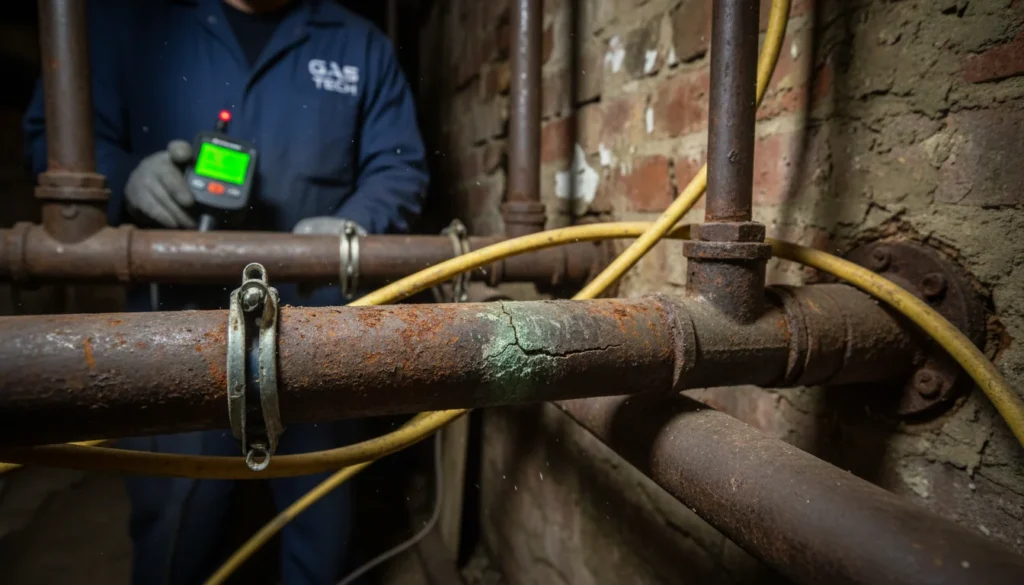
Understanding the Dangers of Corroded Gas Pipes in Newark Homes
If your Newark home was built before 1970, there’s a significant chance it contains aging gas pipes that may be corroding from the inside out. Corrosion in old gas lines isn’t just a maintenance issue—it’s a serious safety hazard that can lead to gas leaks, carbon monoxide exposure, fires, and even explosions. Many Newark homeowners remain unaware that the gas pipes hidden behind their walls and beneath their floors are silently deteriorating, creating invisible dangers that worsen with each passing year.
Newark’s housing stock includes thousands of properties with original gas infrastructure dating back 50, 60, or even 100 years. These aging systems were built with materials and standards that, while acceptable at the time, cannot withstand the test of time without significant degradation. Understanding when corrosion becomes a critical safety risk can mean the difference between a routine repair and a catastrophic emergency.
The History of Gas Pipe Materials in Newark Homes
To understand the corrosion problem, you need to know what’s likely running through your Newark home’s walls. Gas pipe materials have evolved significantly over the past century, and each type presents unique corrosion challenges.
Cast Iron Gas Pipes (Pre-1950s)
Many older Newark homes, particularly in established neighborhoods like Weequahic and the Ironbound district, contain cast iron gas pipes. These were the standard from the late 1800s through the mid-20th century. While durable in some respects, cast iron is highly susceptible to rust and corrosion, especially when exposed to moisture. The interior walls of these pipes gradually develop rust buildup that narrows the pipe diameter and creates weak points where leaks can develop.
Steel Gas Pipes (1950s-1980s)
Steel pipes replaced cast iron in many Newark homes built during the post-war housing boom. While stronger than cast iron, steel pipes also corrode over time, particularly at joints and threaded connections. The galvanized coating that was meant to protect these pipes eventually wears away, leaving bare metal exposed to moisture and oxygen—the perfect recipe for rust formation.
Copper and Modern Materials
Copper tubing became more common in the 1970s and 1980s, offering better corrosion resistance. However, even copper can develop pinhole leaks due to water quality issues and electrolysis. Today’s CSST (Corrugated Stainless Steel Tubing) and black iron pipes represent significant improvements, but older homes rarely have these modern materials unless they’ve undergone updates.
How Corrosion Develops in Gas Pipes
Corrosion doesn’t happen overnight. It’s a gradual process that accelerates under certain conditions common in Newark homes.
Moisture Exposure
Newark’s humid climate and proximity to the Passaic River create conditions where moisture can infiltrate walls and basements. When moisture contacts metal gas pipes, especially older cast iron and steel varieties, oxidation begins. This process is particularly aggressive in basements with poor ventilation or areas where condensation regularly occurs.
Soil Conditions
For gas lines running underground to your home or between buildings, Newark’s soil composition plays a critical role. Acidic or alkaline soils accelerate external corrosion. Clay-heavy soils that retain moisture create a constant corrosive environment around buried pipes. Many Newark properties have underground gas lines that have been slowly corroding for decades without any visible indication to homeowners.
Electrochemical Reactions
When dissimilar metals come into contact in the presence of moisture, galvanic corrosion occurs. This is common at connection points where old steel pipes meet brass fittings or copper components. These junction points often become the weakest links in aging gas systems.
Internal Corrosion from Gas Contaminants
Natural gas itself can contain trace amounts of moisture and sulfur compounds that contribute to internal pipe corrosion. Over decades, this internal attack combines with external moisture exposure to compromise pipe integrity from both sides.
Warning Signs of Corroded Gas Pipes in Your Newark Home
Recognizing the symptoms of gas pipe corrosion can help you address problems before they become emergencies. Many Newark homeowners miss these subtle warning signs until a serious situation develops.
Visible Corrosion on Exposed Pipes
Check exposed gas pipes in your basement, utility room, or near your gas meter. Look for rust-colored stains, flaking metal, or white/green corrosion deposits. Any visible corrosion on the outside indicates the pipe is likely compromised internally as well.
The Smell of Natural Gas
Natural gas is odorless, but utility companies add mercaptan, which smells like rotten eggs or sulfur. If you detect this odor anywhere in your home, especially near gas appliances or in basements, it indicates a leak that could be caused by corroded pipes. This requires emergency gas line leak repair services immediately.
Hissing or Whistling Sounds
Gas escaping through small holes or cracks in corroded pipes often creates a hissing or whistling sound. These sounds may be subtle and easily overlooked, especially if they’re coming from within walls or beneath floors.
Dead Vegetation
If you have underground gas lines, watch for unexplained dead patches in your lawn or garden. Gas leaking from corroded underground pipes kills plant roots and creates distinctive dead zones in otherwise healthy vegetation.
Higher Gas Bills
Unexplained increases in your gas bills may indicate that gas is escaping through corroded pipes before reaching your appliances. While many factors affect gas usage, a sudden spike without corresponding changes in your habits warrants investigation.
Physical Symptoms
Chronic exposure to small gas leaks can cause headaches, dizziness, nausea, fatigue, and respiratory irritation. If multiple household members experience these symptoms that improve when away from home, gas leaks from corroded pipes could be the culprit.
The Serious Safety Risks of Corroded Gas Pipes
Understanding why corroded gas pipes pose such serious dangers helps contextualize the urgency of addressing them in Newark homes.
Explosion and Fire Hazards
Natural gas is highly flammable. When it leaks from corroded pipes into enclosed spaces, it can accumulate to dangerous concentrations. A single spark from an electrical switch, appliance, or even static electricity can ignite this gas, causing explosions or fires. Newark’s dense housing stock means that a gas explosion in one home can affect neighboring properties as well.
Carbon Monoxide Poisoning
While natural gas itself isn’t toxic, corroded gas lines can affect how gas appliances function. Improper combustion due to inadequate gas flow can produce carbon monoxide, an odorless, colorless poison that kills without warning. Additionally, if corrosion affects venting systems for gas appliances, combustion byproducts including carbon monoxide can back up into living spaces.
Structural Damage
Gas leaks from severely corroded pipes can migrate through walls, floors, and foundations, potentially causing structural damage over time. The pressure from gas accumulation in confined spaces can crack foundations and damage building materials.
Property Devaluation
Homes with known gas pipe corrosion issues face significant devaluation. During real estate transactions, home inspections that reveal aging gas infrastructure often lead to substantial price reductions or required repairs before closing.
Why Newark Homes Are Particularly Vulnerable
Several factors make Newark properties especially susceptible to gas pipe corrosion problems.
Age of Housing Stock
Newark contains numerous pre-war homes and buildings constructed when gas pipe technology was far less advanced. Neighborhoods throughout the Westside and other established areas feature homes that are 80-100+ years old with original or minimally updated gas infrastructure.
Climate and Environmental Factors
Newark’s humid subtropical climate with cold winters creates temperature fluctuations that accelerate corrosion. Freeze-thaw cycles cause expansion and contraction that stresses aging pipes and opens cracks where moisture can enter. The urban environment also contributes pollutants and chemicals that can accelerate external corrosion.
Deferred Maintenance
Many Newark properties, particularly rental units and older homes, have experienced decades of deferred maintenance. Gas pipes hidden behind walls receive little attention until problems become obvious, by which time corrosion is often advanced.
Original Infrastructure
Unlike some newer suburban developments, many Newark neighborhoods were built with centralized gas distribution systems that haven’t been comprehensively updated. This means entire blocks may have aging infrastructure that’s corroding simultaneously.
When Corrosion Requires Immediate Action
Not all corrosion requires emergency replacement, but certain situations demand immediate professional intervention.
Active Gas Leaks
Any detectable gas odor, confirmed gas leak, or situation where you’ve shut off gas due to suspected leaks requires immediate professional assessment. Don’t attempt to restore gas service yourself.
Visible Severe Corrosion
If exposed pipes show heavy rust, flaking metal, or visible holes, the hidden portions are likely worse. Pipes with visible severe corrosion should be considered compromised and scheduled for replacement.
Failed Pressure Tests
If you’ve had gas work done and the system fails pressure testing, corrosion is a likely culprit. Pressure tests reveal leaks that may not be immediately obvious but indicate compromised pipe integrity.
Homes Over 50 Years Old
If your Newark home is over 50 years old and has never had gas line updates, proactive inspection and likely replacement should be considered even without obvious symptoms. The risk of sudden failure increases dramatically with age.
Solutions for Corroded Gas Pipes in Newark Homes
Addressing corroded gas pipes requires professional expertise and adherence to strict safety codes.
Professional Inspection
The first step is a comprehensive inspection by qualified gas line professionals. This should include pressure testing, visual inspection of accessible pipes, and assessment of the overall system age and condition. Modern leak detection equipment can identify problems hidden behind walls without destructive investigation.
Targeted Repairs vs. Complete Replacement
For limited corrosion in newer systems, targeted repairs may suffice. However, for homes with original gas pipes from the 1960s or earlier, complete replacement is typically the most cost-effective and safest long-term solution. Piecemeal repairs on severely corroded systems often lead to recurring problems as corrosion continues in unreplaced sections.
Modern Pipe Materials
Replacement projects should use modern materials like black iron pipe or CSST that resist corrosion and meet current safety codes. Professional installation ensures proper sizing, support, and protection from future corrosion.
Gas Appliance Considerations
When replacing gas lines, it’s an opportune time to assess your gas appliances as well. Older appliances may not be compatible with modern gas pressures, or their connections may need updating. Professional gas appliance gas line repair ensures everything works safely together.
Permits and Inspections
All gas line work in Newark requires proper permits and inspections. Professional gas line contractors handle these requirements, ensuring your system meets municipal codes and passes inspection. This documentation is crucial for insurance purposes and future property sales.
Preventing Future Corrosion Problems
Once you’ve addressed existing corrosion, prevention strategies can extend the life of your gas system.
Control Moisture
Address basement moisture, improve ventilation, and fix water leaks promptly. Keeping gas pipes dry dramatically slows corrosion.
Regular Inspections
Schedule professional gas line inspections every 3-5 years, or more frequently for older systems. Early detection of developing corrosion allows for proactive repairs before emergency situations develop.
Cathodic Protection
For underground gas lines, cathodic protection systems can prevent external corrosion by using electrical currents to counteract the electrochemical corrosion process.
Proper Installation
When adding new gas appliances or making modifications, ensure proper installation techniques that prevent galvanic corrosion and protect pipes from moisture exposure. Professional gas line relocation and modification services ensure new work doesn’t compromise existing infrastructure.
The Cost of Ignoring Corroded Gas Pipes
While gas line replacement represents a significant investment, the cost of ignoring corroded pipes can be catastrophic.
Property damage from gas explosions or fires typically exceeds hundreds of thousands of dollars. Medical expenses from carbon monoxide poisoning or explosion injuries can be devastating. Legal liability if a gas leak from your property affects neighbors adds another dimension of risk. Insurance may not cover damages if inspections reveal you neglected known hazards.
Beyond financial considerations, the human cost of gas-related accidents is immeasurable. Protecting your family and neighbors from preventable tragedies should be the primary motivation for addressing corroded gas pipes promptly.
Choosing the Right Gas Line Professional in Newark
Not all contractors are qualified for gas line work. When selecting a professional to assess or replace your corroded gas pipes, verify they hold proper licensing for gas line work in New Jersey, carry adequate liability insurance and workers compensation coverage, and have specific experience with older Newark homes and their unique challenges.
Ask for references from similar projects and ensure they pull proper permits and coordinate required inspections. The lowest bid isn’t always the best value when safety is paramount. Quality gas line work protects your investment and your family for decades to come.
Leave a Reply