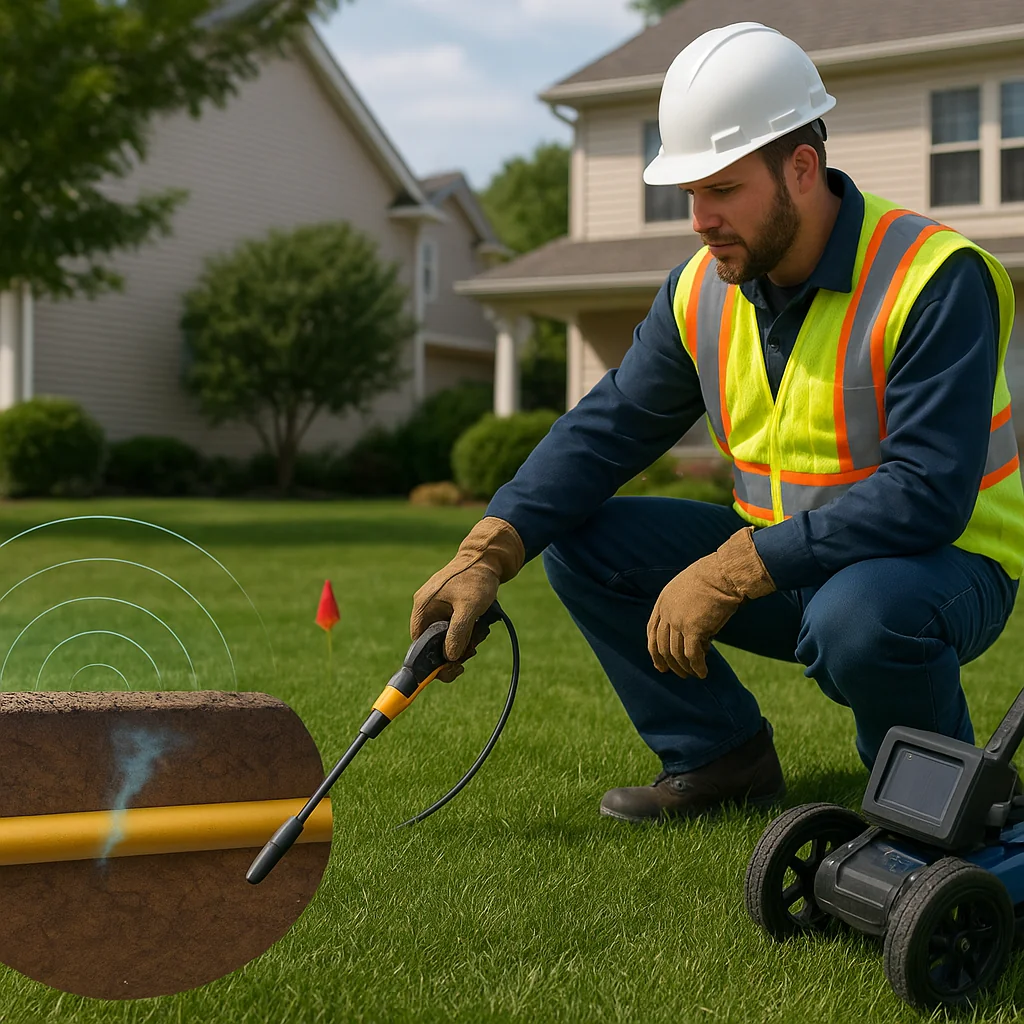
Direct Answer: Modern Gas Leak Detection Methods
When you suspect an underground gas line leak in Newark, you don’t need to worry about your entire yard being torn apart. Today’s gas line professionals use advanced, non-invasive detection technologies including electronic gas detectors, acoustic listening devices, ground-penetrating radar, and infrared thermography to pinpoint the exact location of leaks before any digging begins. These methods allow technicians to identify leak sources with precision, minimizing excavation to only the necessary area and preserving your landscaping while ensuring your safety.
Understanding the Importance of Early Gas Leak Detection
Underground gas line leaks represent one of the most serious home safety concerns Newark residents face. Natural gas, while odorized for detection, can accumulate in soil and confined spaces, creating potentially dangerous situations. The challenge with underground leaks is that they often go undetected longer than indoor leaks because the gas dissipates through soil before reaching the surface where homeowners might smell it.
Early detection is critical not only for safety but also for cost management. A small leak that goes undetected can worsen over time, leading to more extensive damage to your gas line system and higher repair costs. Additionally, even minor leaks contribute to wasted energy and higher utility bills. Newark’s aging infrastructure in some neighborhoods means that proactive leak detection has become increasingly important for homeowners.
The good news is that modern detection technology has revolutionized how professionals locate these hidden problems. Gone are the days when finding a gas leak meant excavating large sections of your property based on guesswork. Today’s methods are precise, efficient, and remarkably non-invasive.
Electronic Gas Detection Equipment
Electronic gas detectors represent the frontline technology in locating underground gas line leaks. These sophisticated devices can sense even trace amounts of natural gas escaping from underground pipes and provide technicians with real-time readings of gas concentration levels.
Combustible Gas Indicators (CGI)
Combustible gas indicators are handheld devices that technicians use to survey your property systematically. These instruments draw air samples from just above the ground surface or from small probe holes and analyze them for the presence of methane and other hydrocarbons. When gas is detected, the device provides both visual and audible alerts, with readings displayed as a percentage of the lower explosive limit (LEL).
Technicians walk a grid pattern across your yard, taking readings at regular intervals. Areas showing elevated gas concentrations indicate potential leak locations beneath the surface. This method is particularly effective in Newark’s diverse soil types, from the clay-heavy areas in some neighborhoods to sandier compositions in others.
Flame Ionization Detectors (FID)
Flame ionization detectors offer even greater sensitivity than standard CGI devices. These instruments can detect gas concentrations in parts per million, making them ideal for finding small leaks that might not register on less sensitive equipment. FID technology uses a hydrogen flame to ionize gas molecules, creating an electrical current proportional to the gas concentration present.
This extreme sensitivity means technicians can identify leaks early, often before they become serious problems. For homeowners concerned about minor leaks that might worsen over time, FID testing provides peace of mind through thorough detection capabilities.
Acoustic Leak Detection Technology
While electronic gas detectors identify the presence of gas, acoustic detection equipment helps pinpoint the exact location of the leak by listening for the sound gas makes as it escapes from a pressurized pipe.
How Acoustic Detection Works
When natural gas escapes from a pipe under pressure, it creates ultrasonic frequencies that travel through the ground. These sounds are typically above the range of human hearing, but specialized acoustic sensors can detect them. Technicians use ground microphones and listening devices to survey the area where gas has been detected electronically.
The acoustic signature of a gas leak is distinctive. As gas rushes through an opening in the pipe, it creates turbulence that generates a consistent hissing or whistling sound. By moving the listening device across the suspected area, technicians can identify where this sound is loudest, indicating the leak’s precise location.
This technology is especially valuable in Newark’s urban and suburban settings where underground utilities are densely packed. Acoustic detection helps differentiate between gas lines and other underground infrastructure, preventing unnecessary excavation of water lines, electrical conduits, or telecommunications cables.
Correlation Technology
Advanced acoustic systems use correlation technology, employing multiple sensors placed at different points along the gas line. Sophisticated software analyzes the time difference between when the leak sound reaches each sensor, calculating the exact distance to the leak source. This triangulation method provides remarkable accuracy, often pinpointing leaks to within inches of their actual location.
Ground-Penetrating Radar (GPR)
Ground-penetrating radar has become an invaluable tool for gas line professionals, though it’s used somewhat differently than gas-specific detection methods. GPR doesn’t detect gas itself but rather maps underground structures, helping technicians understand what’s beneath your yard before any investigation begins.
Mapping Underground Infrastructure
GPR systems emit electromagnetic pulses into the ground and measure the reflections that bounce back from underground objects and layers. Different materials reflect signals differently, allowing technicians to create a detailed map of subsurface features including gas lines, water pipes, electrical conduits, tree roots, and soil layers.
This mapping capability serves two crucial purposes. First, it helps technicians trace the path of gas lines, which is essential when property records are outdated or incomplete—a common situation in Newark’s older neighborhoods. Second, it identifies other utilities in the area, preventing accidental damage during any necessary excavation.
Complementing Other Detection Methods
When used in combination with electronic gas detection, GPR helps technicians understand the context of a leak. For example, if gas detection shows elevated readings in an area, GPR can reveal whether the gas line runs directly beneath that spot or if gas is migrating through soil from a leak elsewhere. This prevents wasted effort digging in the wrong location.
Infrared Thermography
Infrared cameras detect temperature variations that can indicate gas leaks. When natural gas expands as it escapes from a pressurized pipe, it undergoes a process called adiabatic cooling, which creates a temperature difference detectable by thermal imaging equipment.
Thermal Imaging Applications
Technicians use handheld or drone-mounted infrared cameras to scan areas where leaks are suspected. The thermal camera displays temperature variations in different colors, making cooler areas stand out visually. While this method works best in certain environmental conditions, it provides another data point that helps confirm leak locations identified through other methods.
In Newark’s climate, thermal imaging is particularly effective during spring and fall when ground temperatures are relatively stable. Extreme heat or cold can make thermal signatures more difficult to interpret, but experienced technicians know how to account for environmental factors.
Pressure Testing and Flow Analysis
Before deploying detection equipment across your entire property, technicians often begin with pressure testing of your gas line system. This diagnostic approach helps determine whether a leak exists and provides clues about its severity and approximate location.
Static Pressure Testing
In a static pressure test, technicians isolate a section of gas line, pressurize it to a specific level, and monitor whether pressure drops over time. A pressure drop indicates that gas is escaping somewhere in that section. By testing different segments of your gas system, technicians can narrow down which area of your property contains the leak before deploying more sophisticated detection equipment.
This methodical approach saves time and reduces costs. Rather than surveying your entire yard, technicians can focus detection efforts on the segment that failed pressure testing.
Flow Analysis
Flow meters can detect unusual gas consumption patterns that indicate leaks. If your gas meter shows continuous flow even when all appliances are turned off, gas is escaping somewhere in your system. While this doesn’t pinpoint the leak location, it confirms that investigation is warranted and helps justify the investment in professional detection services.
The Detection Process: What Newark Homeowners Can Expect
When you contact NE Gas Line Emergency Services about a suspected underground leak, the detection process follows a systematic approach designed to locate the problem quickly while minimizing disruption to your property.
Initial Assessment
The process begins with a thorough assessment of your concerns and symptoms. Technicians will ask about any gas odors you’ve noticed, dead vegetation in your yard, unusual sounds, or increases in your gas bills. They’ll also review your property’s gas line configuration and age, which helps them understand potential weak points in your system.
During this initial visit, technicians perform visual inspections of your yard, looking for telltale signs like dying grass or plants, soil discoloration, or bubbling water in puddles—all indicators that gas may be escaping underground. They’ll also check your gas meter for signs of continuous flow when appliances are off.
Electronic Survey
Next, technicians conduct a comprehensive electronic survey of your property using gas detection equipment. They’ll walk systematic patterns across your yard, taking readings at regular intervals and paying special attention to areas near gas line routes, around your meter, and near gas appliances. This survey creates a map of gas concentration levels across your property.
Areas showing elevated readings become focal points for more intensive investigation. Technicians may drill small probe holes in these locations to take subsurface readings, which helps determine whether gas is present at depth or just at the surface.
Pinpoint Location
Once the general area of the leak is identified through electronic detection, technicians deploy acoustic equipment and possibly thermal imaging to pinpoint the exact location. This step is crucial because it determines precisely where excavation will occur. The more accurate this pinpointing, the smaller the excavation area and the less disruption to your landscaping.
In some cases, particularly with very small leaks or complex underground environments, technicians may use multiple detection methods to confirm the leak location before recommending excavation. This thoroughness ensures that when digging does occur, it’s in exactly the right spot.
Excavation and Repair
Only after the leak location is precisely identified does excavation begin. Modern detection methods typically allow technicians to limit digging to a small area—often just a few square feet—rather than trenching across your entire yard. This targeted approach preserves your landscaping and reduces restoration costs.
Once the damaged section of pipe is exposed, technicians can perform emergency gas line leak repair using appropriate methods for your pipe type and local code requirements. After repairs are complete and tested, the excavation is backfilled and your yard is restored as closely as possible to its original condition.
Why Professional Detection Matters
While consumer-grade gas detectors are available at hardware stores, professional detection offers significant advantages that justify the investment in expert services.
Equipment Calibration and Accuracy
Professional-grade detection equipment is significantly more sensitive and accurate than consumer devices. More importantly, this equipment requires regular calibration to ensure reliable readings. NE Gas Line Emergency Services maintains and calibrates detection equipment according to manufacturer specifications and industry standards, ensuring that readings are trustworthy.
Improperly calibrated equipment can give false readings—either failing to detect gas that’s present or indicating gas where none exists. Professional technicians understand the nuances of their equipment and can interpret readings in context, accounting for environmental factors that might affect measurements.
Experience and Interpretation
Detection equipment provides data, but experience turns that data into actionable information. Seasoned technicians understand how gas migrates through different soil types, how Newark’s climate affects detection, and how to distinguish between gas line leaks and other sources of gas readings like sewer gas or naturally occurring methane.
This expertise is particularly valuable in complex situations. For example, gas from a leak can travel significant distances through soil, appearing at the surface far from the actual leak location. Inexperienced operators might dig where gas is detected rather than where the leak actually exists. Professional technicians understand gas migration patterns and use multiple detection methods to trace gas back to its source.
Safety Protocols
Gas leak detection and repair involve serious safety considerations. Professional technicians follow strict protocols to prevent ignition sources near gas leaks, properly ventilate work areas, and protect both themselves and property occupants. They also know when to evacuate a property if gas concentrations reach dangerous levels and how to coordinate with local utilities and emergency services when necessary.
Attempting DIY gas leak detection or repair can be extremely dangerous. Natural gas is highly flammable, and even small mistakes can lead to explosions or fires. Professional services ensure that detection and repair work is conducted safely according to industry best practices.
Newark-Specific Considerations
Newark’s unique characteristics influence how gas leak detection is conducted and what homeowners should be aware of regarding their underground gas lines.
Age of Infrastructure
Many Newark neighborhoods feature older homes with aging gas line infrastructure. Properties built before the 1970s may have steel pipes that are now susceptible to corrosion, while homes from the 1970s and 1980s might have early plastic pipes that have reached the end of their service life. These older systems require more frequent inspection and are more likely to develop leaks.
If your Newark home is more than 30 years old and has never had its gas lines inspected or updated, proactive detection services can identify problems before they become emergencies. This is particularly important in neighborhoods like Eastside (Sandy Hill) and Westside, where many properties feature original gas line installations.
Soil Conditions
Newark’s soil composition varies across the city, affecting both how gas lines corrode and how gas migrates through soil. Clay-heavy soils retain moisture, which can accelerate corrosion of metal pipes but also tends to contain gas leaks in a more confined area. Sandy soils drain well but allow gas to migrate more freely, potentially causing gas to surface far from the actual leak location.
Professional technicians familiar with Newark’s local conditions understand these variables and adjust their detection approaches accordingly. They know which detection methods work best in different soil types and how to interpret readings based on local ground conditions.
Local Code Requirements
Newark has specific code requirements for gas line installation and repair. When leaks are found and repairs are needed, work must comply with these local codes as well as state and federal regulations. Professional services like NE Gas Line Emergency Services stay current with these requirements, ensuring that repairs meet all applicable standards.
This compliance is crucial not only for safety but also for property value and insurance purposes. Improperly repaired gas lines can create liability issues and may need to be redone at additional cost if they don’t meet code requirements. Working with professionals who understand gas line code compliance repair ensures that work is done right the first time.
Preventive Measures and Maintenance
While modern detection methods excel at finding existing leaks, prevention remains the best approach to gas line safety and avoiding costly repairs.
Regular Inspections
Scheduling periodic gas line inspections helps catch problems early when they’re smaller and less expensive to repair. For older homes, annual or biennial inspections provide peace of mind and often identify minor issues before they become major leaks. These inspections use the same non-invasive detection methods described above, surveying your property without any digging unless problems are found.
Awareness of Warning Signs
Homeowners should remain alert to potential signs of underground gas leaks. These include the distinctive sulfur or rotten egg odor of natural gas in your yard, dead or dying vegetation in localized areas despite adequate watering, hissing or whistling sounds near gas lines, and unexplained increases in gas bills. If you notice any of these signs, contact professional detection services promptly.
Protecting Gas Lines During Landscaping
Many underground gas line leaks result from damage during landscaping or construction projects. Before any digging in your yard, always call 811 to have underground utilities marked. Even shallow digging for fence posts or garden beds can damage gas lines if you’re unaware of their location. When hiring contractors for yard work, ensure they follow proper protocols for working around underground utilities.
Appliance Maintenance
While this article focuses on underground
Leave a Reply